How can a thing remain itself while changing? What does a clock measure? How does an event leave evidence, and what happens to its truth when that evidence disappears?
Changism develops a philosophy of reality as organized activity. Its starting point is the concrete world: clocks operating, stones resisting pressure, living bodies maintaining themselves, and people learning to respond differently. From these cases, the book asks how things acquire unity, how they persist, and how their relations make a difference.
The rewritten second edition brings this inquiry together in three parts. It offers the fullest introductory route through the system, while keeping its philosophical commitments, scientific background, and exploratory proposals distinguishable.
Inside the Book
Part I — Time Without a Stage begins with clocks and calendars, then follows questions about order, duration, memory, and the past and future. It examines relativity, distant simultaneity, and the limits of a universal “now.” The guiding distinction is between what changes, how change is ordered, and how processes are compared.
Part II — A World of Activity develops the wider philosophy. What makes something one thing? How do capacities persist when unused? What distinguishes a productive cause from evidence or a rule? The discussion moves through identity, interaction, constraints, emergence, and historical truth before turning to consciousness, personal continuity, and self-government.
Part III — The Universe Through Its Records follows the reconstruction of cosmic history through received signals and physical evidence. It introduces the hot early universe, the formation of structure, and the measurement of expansion. Later chapters explore relational tempo proposals, possible tests, cosmic futures, and the more speculative question of renewal through collapse.
Three appendices place Changism in conversation with Stoic accounts of time, Whitehead's process philosophy, and relational quantum mechanics.
Who It Is For
This is the place to begin if you are curious about Changism and want to follow its development across several subjects. Everyday examples provide the entry points. You can assess the philosophical proposal while retaining your own judgement about its implications for consciousness or cosmology.
How to Read It
Reading the three parts in order gives the clearest sense of the complete argument. If a particular subject draws you in first, use its chapter as an entry point and return to the earlier distinctions when needed. The questions about records and evidence, for example, recur in the discussions of memory, historical truth, and cosmological observation.
For a closer comparison of time theories, continue with Searching for Time. For the mathematical and observational development of the cosmology programme, continue with Relational Tempo Cosmology.
Sample Chapter
Chapter 1 — Change Comes First
The opening chapter begins inside an ordinary quartz clock. It follows the physical activity that produces a reading and asks how much that reading establishes about time. It introduces the distinctions used throughout the book and explains what would count against the view.
The sample comes from the rewritten second edition, so it also gives a first look at the book's approach and voice.
PDF · 7 pages · 0.1 MB · Second edition
Editions and Purchase
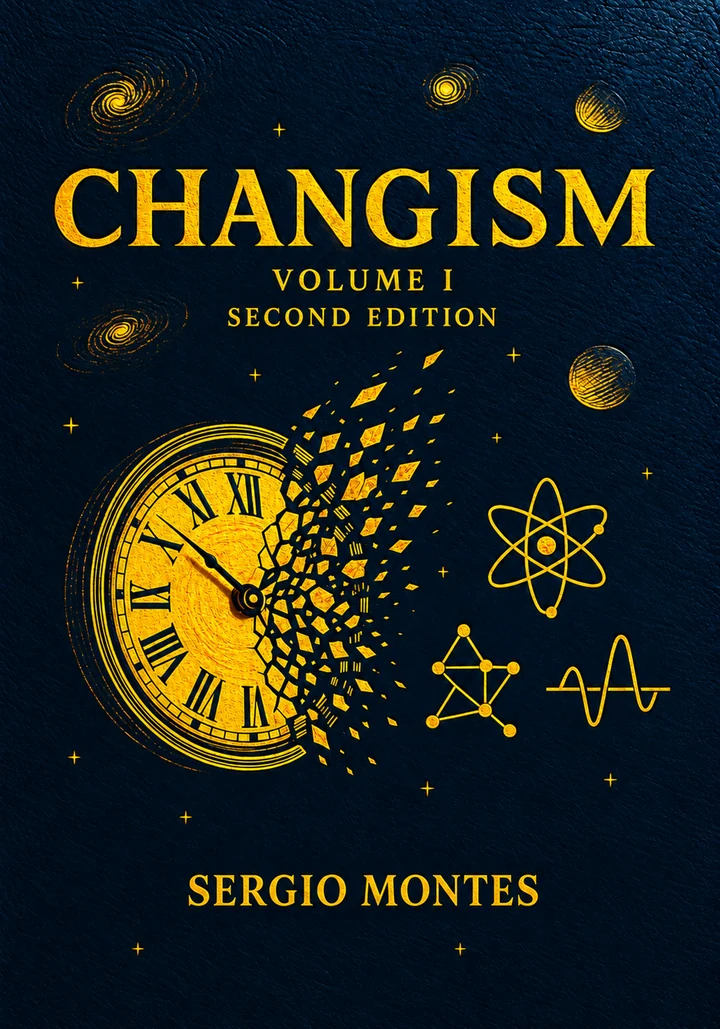
The completely rewritten second edition is now available in paperback. It replaces the first edition of December 2025, which is no longer on sale.
Corrections and Related Reading
Corrections are identified by edition and chapter so that readers can match an entry to their copy. Longer developments of an argument belong with the related research rather than being treated as changes to a book already published.
For shorter introductions to the themes, visit Explore the Ideas. For the detailed arguments behind them, visit Research.
Book Corrections and Supporting Materials